Benissa has 4,120 pools on the Catastro register
According to the Catastro there are 4,120 outdoor pools registered in Benissa, 69 more than in 2022. That is an enormous figure for a municipality of barely over 12,000 inhabitants: there are more registered pools in Benissa than in Benalmádena (4,057), a Costa del Sol town several times its size. Across the province as a whole, the Catastro counts 132,495 pools in the 141 municipalities of Alicante, 6,360 more than in 2022, a rise of 5.0 % in four years, which puts it second in Spain for registered pools, behind only Madrid. Jávea leads the province with 9,317, followed by Orihuela with 7,375, Dénia with 5,175, Torrevieja with 4,931, the city of Alicante with 4,866 and Calpe with 4,744. Benissa, with its 4,120, sits in that same order of magnitude on a fraction of the population of any of them.
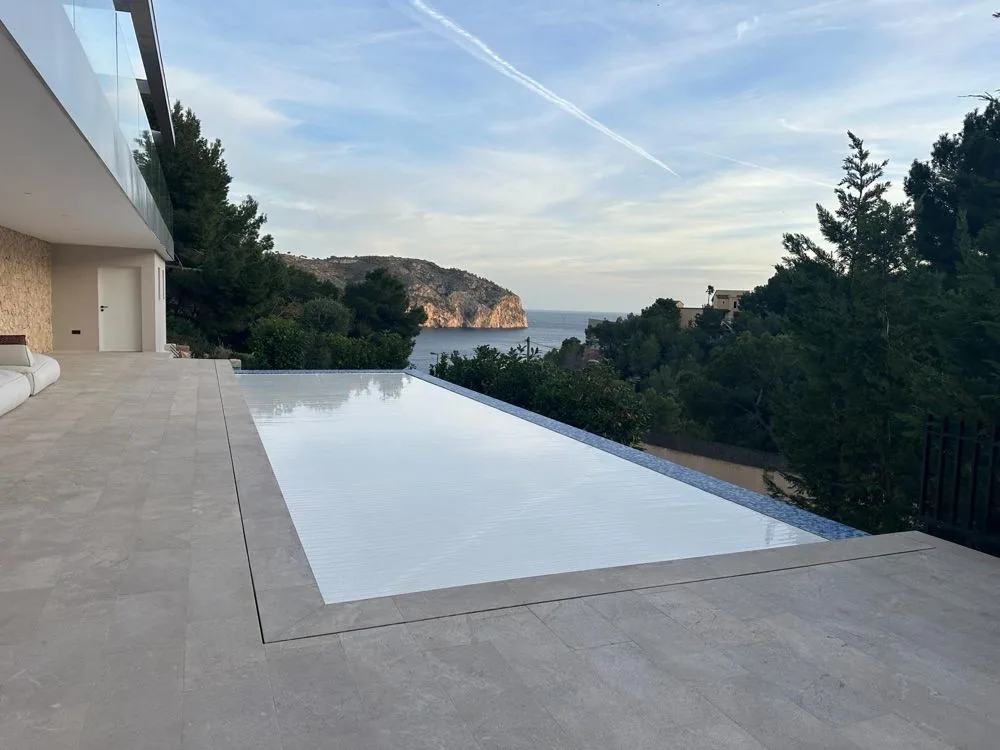
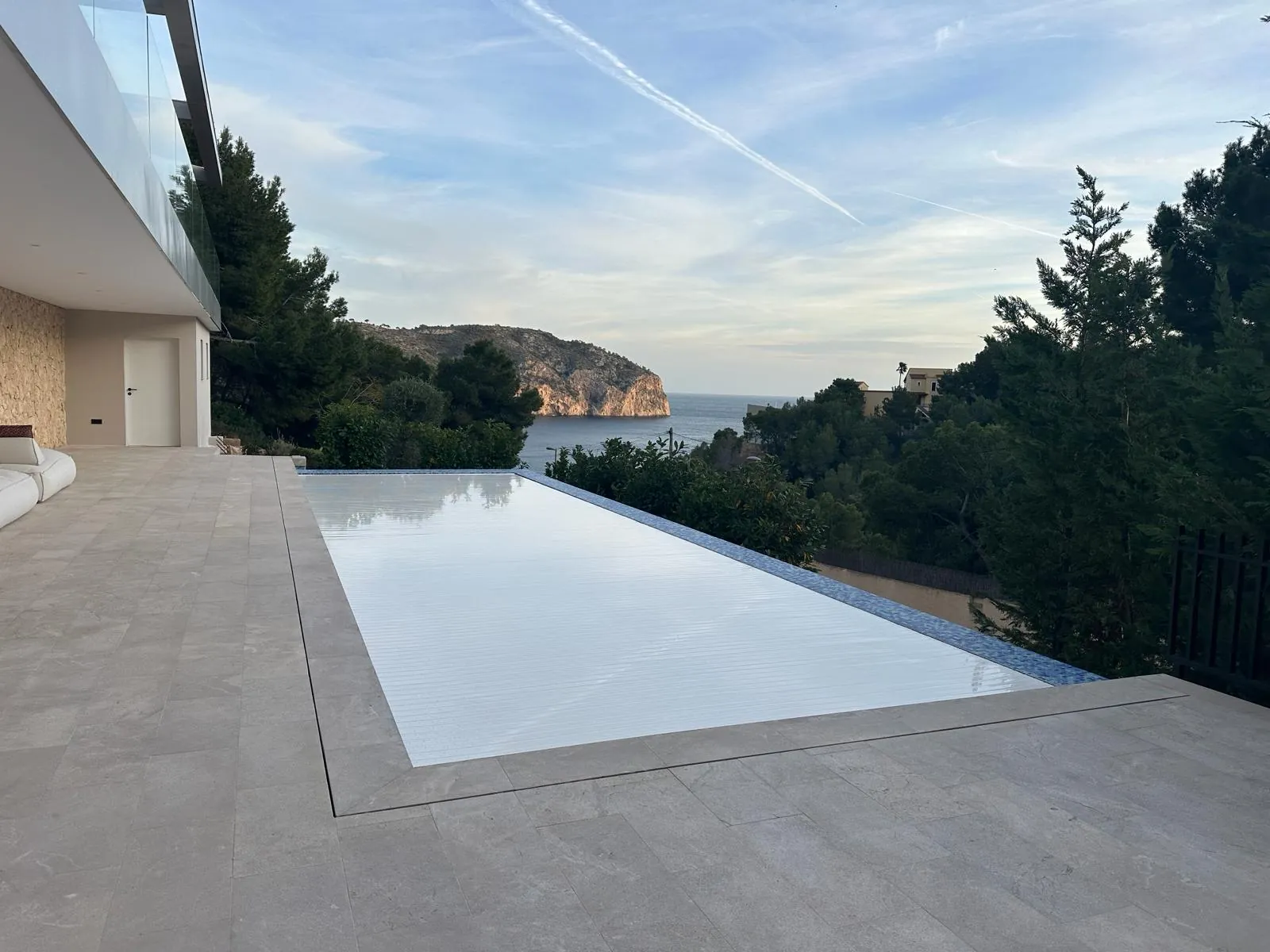
There is a simple reason why a municipality of twelve thousand people has four thousand pools, and it is very plain on the ground: on Benissa Costa there is hardly an apartment block to be found, there are plots with villas, and the plot ends up having a pool. That is the pattern of the four kilometres between Calpe and Moraira, with the urbanisations hanging above the coves, and it is also the pattern of the partidas inland, where the detached villa and its pool have stood for decades. That older stock, with dimensions that rarely match a catalogue, is exactly the job we are asked for most: covering a pool that already exists.
A necessary word about these numbers, so that nobody reads more into them than is there. The Catastro census under-records: it is a floor, not a ceiling. Some pools were never declared, others appear late and small shells never make it onto the register, so the real figure is higher than the published one. The Catastro also makes no distinction between a private pool, a communal one, a hotel's or a club's: the 4,120 in Benissa are all the bodies of water registered in the municipality, not 4,120 houses with a pool. And the data does not go below municipal level: there is no official breakdown by village or by urbanisation, so it cannot be said how many are in La Fustera and how many in the old town. When we divide the area up by village we do it by geography and by our own work, never by attributing figures to a neighbourhood.
In practice, that profile of a family pool on its own plot is the one that pays a cover back best, and here the argument is not an aesthetic one. A closed slatted cover cuts evaporation by between 70 % and 80 %: on an 8×4 metre pool that is between 15,000 and 25,000 litres a year that do not have to be replaced, which in the Marina Alta is no small detail. If there is a heat pump, the system's consumption falls by between 50 % and 60 %, and with solar polycarbonate slats the water gains 6 or 7 °C during the day at no cost at all. The other reason people call us is safety: closed, the slats form a continuous surface that prevents access to the water and holds 100 kg, built to NF P90-308, which is a French standard, not a European one. It is worth saying plainly: that does not make it a walk-on or step-on surface, and nobody should walk on it. You can see the whole province on our page for pool covers in Alicante and on the Costa Blanca.