
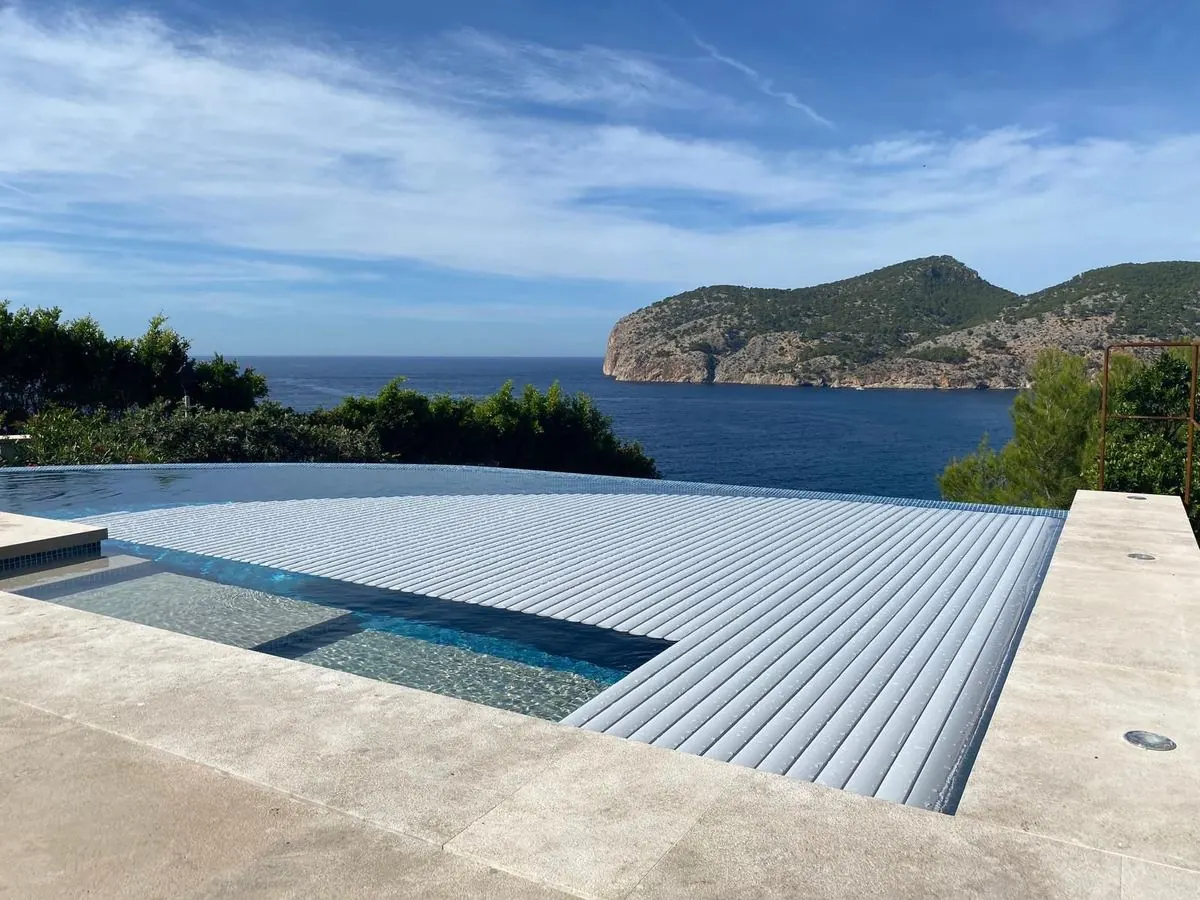
What we repair, and what usually goes wrong
Nearly every fault we are called out to falls into one of three families. The motor no longer winds, stops halfway or runs noisily — which may be the motor itself, the limit switch or the control panel, and the three are easy to confuse from the poolside. The control panel or remote fails to start, responds intermittently or has burnt out. Or the slats themselves are cracked, split or have come away from their neighbours.
Diagnosis matters more than it sounds. Replacing a motor when the limit switch has drifted is an expensive way to not fix a cover, and it happens often when whoever attends does not know the mechanism. Because we design and build these systems, our technicians read the symptom, check the electrics and identify the actual failed component before anything is ordered.
Repairs cover both roller types we work with: over-water rollers, whether exposed or housed in a bench box, and submerged rollers hidden in their own recess at the end of the pool. Both use the same family of motors, control panels and slats, so a fault on either is familiar ground rather than a puzzle.
We make replacement slats to measure in PVC and in polycarbonate, solar or transparent, so a damaged run can be renewed without changing the whole cover. Structural components are stainless steel 316L, chosen for pool chemistry and salt air — which is also why a cover of ours from ten years ago is generally still worth repairing.