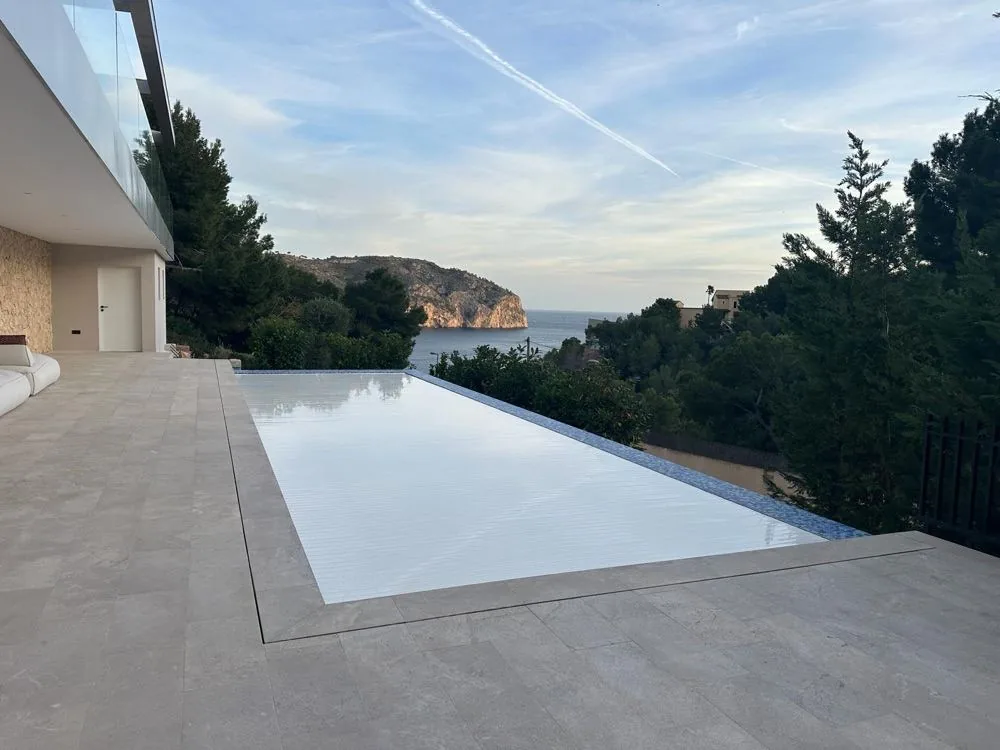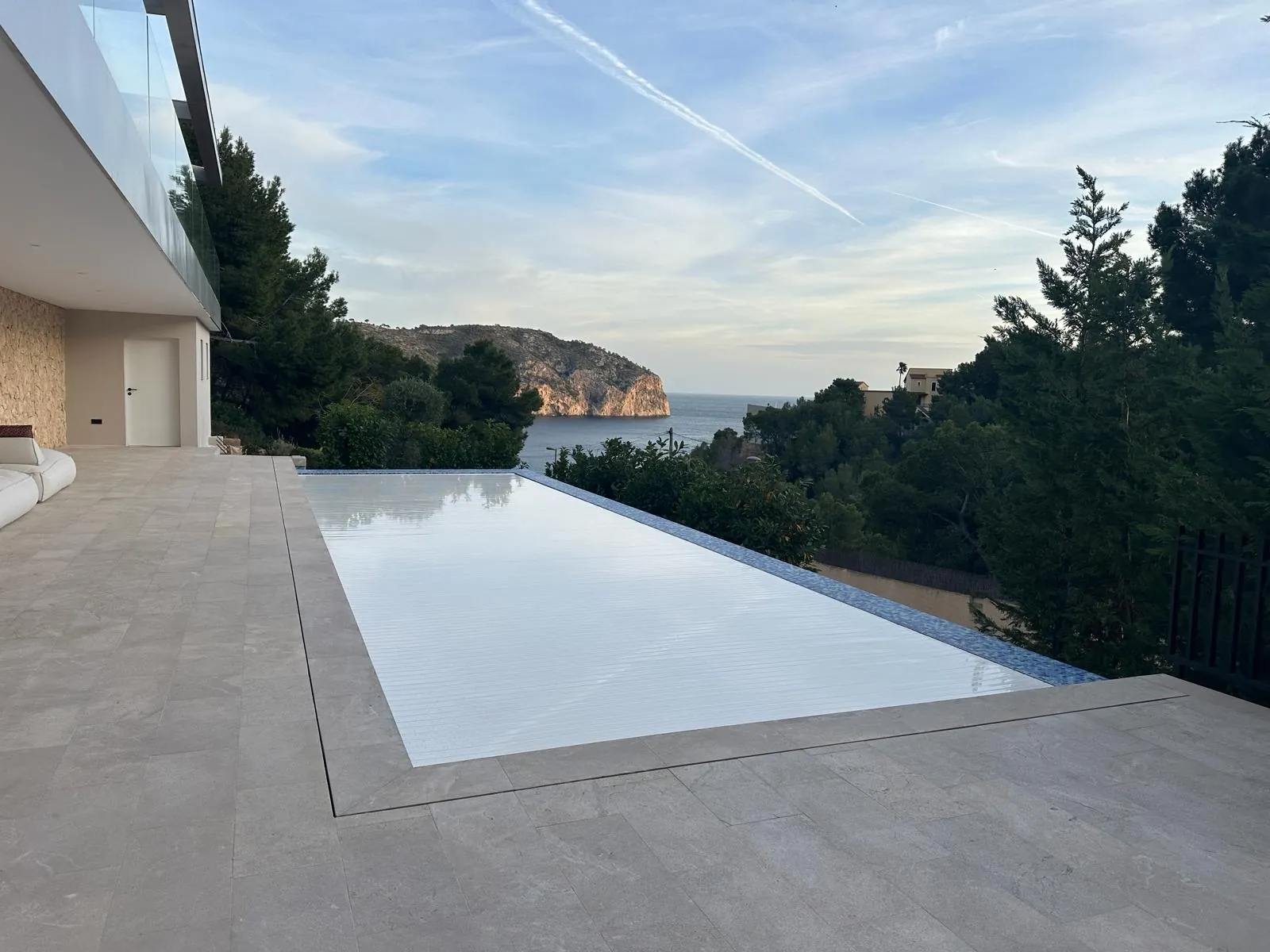
Which cover suits the Jávea climate?
Jávea has one of the gentlest microclimates in Spain: more than 300 days of sun a year, an annual average of 18–20°C, mild winters, and summers tempered by the sea breeze and the bulk of the Montgó behind the town. The swimming season is long here even by Spanish standards, and the right cover is what turns "long" into "most of the year".
Two things spoil a pool here: evaporation and dirt. Under a dry July sun an uncovered pool can lose up to a centimetre of water a day, and the sun burns off your chlorine at the same time. Closed, the slats sit on the surface and stop most of that — less topping up, less chemistry to correct, and a pool that isn't a green pond when you fly back in April.
The debris here is particular to Jávea: pine needles and cones off the Montgó, fine sand blown up from the Arenal, dust from the cliff paths — and then the autumn downpours, which arrive in a few hours and wash the lot into the water. A closed cover keeps all of it out, and you hose the slats down instead of fishing leaves out with a net.
Safety matters more when the house is empty. Our covers are built to the French standard NF P90-308, so the closed cover acts as a safety barrier designed to keep a child under five out of the water — reassuring when grandchildren visit, and a point many insurers like to hear. On an existing pool the roller sits visible on the coping, with no work to the shell; where there's room and the pool is still being built, we can sink it out of sight instead.
So which slat? PVC is the robust, hard-wearing choice: opaque, tough under the Costa Blanca sun, and the one most owners here pick for safety and cleanliness. Solar polycarbonate puts all that sunshine to work, adding a few degrees to the water, bringing the first swim of the year forward into spring and keeping the pool comfortable into late autumn. Clear polycarbonate is the discreet option where the pool is the view. Compare all three on our <a href="/en/lamas.html">slat types</a> page.