Choosing the right slat for the Torrevieja climate
Torrevieja has one of the steadiest climates on the Mediterranean: somewhere around 2,650 hours of sunshine a year, and daytime highs of roughly 16 to 17°C right through the winter. The sea and the two salt lagoons give the town a famously stable microclimate. For a pool, that means a long and genuinely usable season, but also many months in which an open, unprotected water surface is quietly working against you.
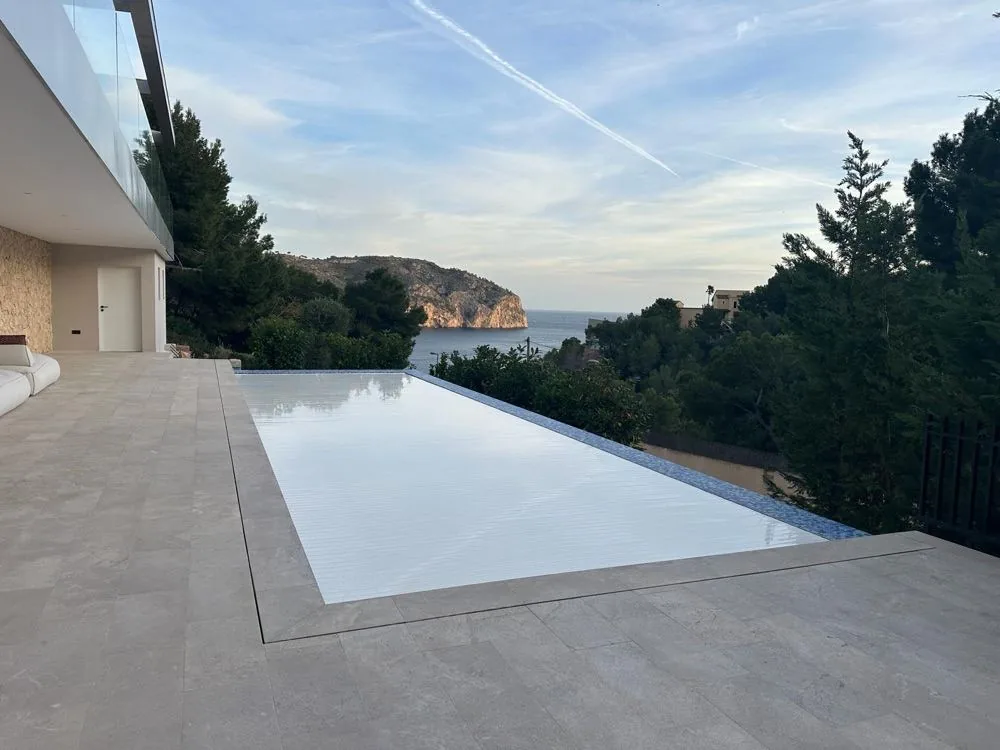
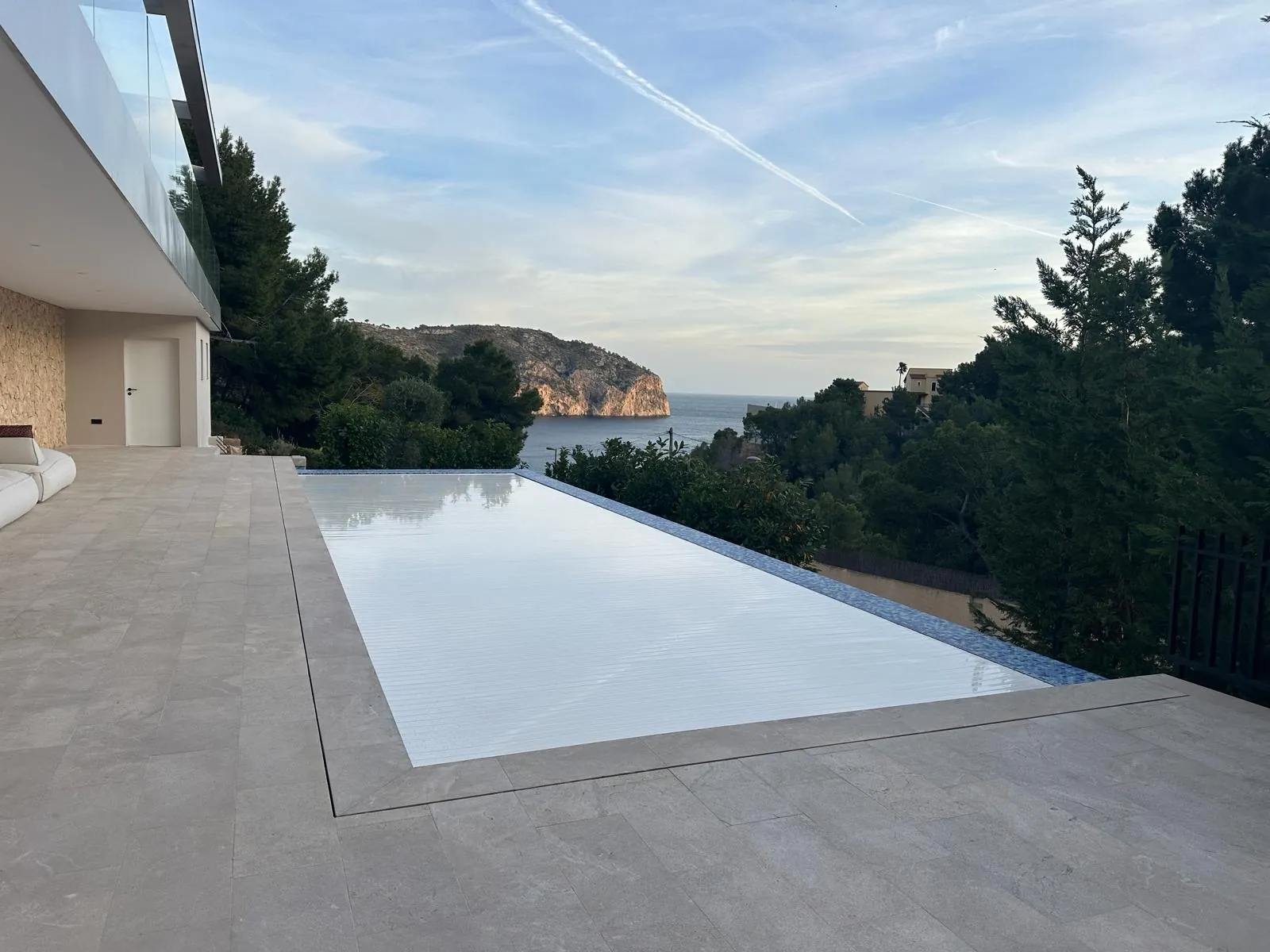
Evaporation is the first thing owners here notice. Through a hot, dry summer an uncovered pool can lose several centimetres of water a week, and every litre you replace is water you've paid for and chemistry you then have to rebalance. A slatted cover sits directly on the surface and puts a stop to it. It also keeps out the dust, leaves and fine sand the wind carries in off the beaches and the salt flats.
If the villa stands empty between visits, the cover changes everything. Closed, the water stays clear instead of turning green, the filtration system has far less to do, and the slats form a continuous safety barrier, built to NF P90-308, that keeps children and pets out of the water. It's a safety cover, not a surface to walk on. Every cover runs on a 230 V motor and is operated from a key switch or a remote control. There's no manual version.
Everything structural we make is 316L stainless steel, the marine grade: the roller shaft, the brackets, the fixings and the housing box where one is fitted. A cheaper alloy pits and stains within a season or two this close to the water, and we won't use one. Where the roller sits depends on the pool. On an existing pool it stays visible on the coping at one end; on a new build it can be hidden below the water line.
So which slat? PVC is the workhorse: robust, unbothered by strong sun and salt air, and the sensible choice if you want durability with the least fuss. Solar polycarbonate captures the sunlight and transfers that heat into the water, warming the pool naturally and stretching the season at both ends, which counts for a lot here. Transparent polycarbonate is the design-led choice, keeping the water visible with the same convenience and evaporation control. For most pools here it's PVC or solar polycarbonate. Compare them on our <a href="/en/lamas.html">slat types</a> page.